


AI Security Posture Management: What It Is and How It Applies to AI Agent Fleets

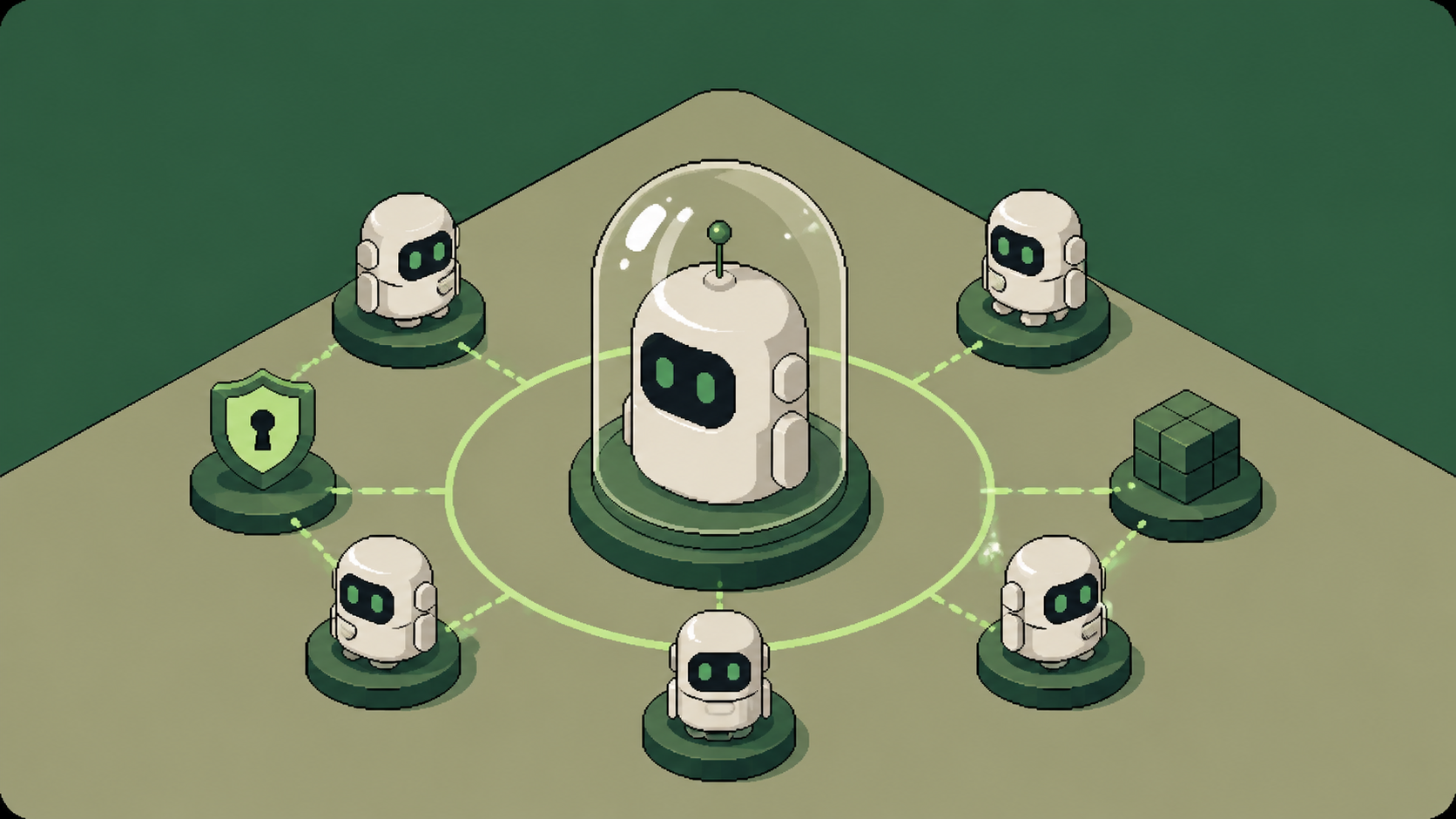
An agent doesn't log in once. It calls APIs continuously, across dozens of tools, often without a human in the loop. It might be running a workflow in Jira, pulling data from GitHub, and sending a message in Slack – all within the same minute. And in most enterprises right now, nobody has a complete picture of which agents are doing what.
That's the gap AI security posture management is designed to close.
What AI Security Posture Management Actually Means
AI security posture management (AI-SPM) is the ongoing practice of identifying, assessing, and controlling the security risks that AI systems introduce into your environment. It borrows the "posture management" framing from cloud security (CSPM) and applies it to a new category of non-human actors: AI agents, LLM-connected apps, and the tool access they carry.
The core questions AI-SPM tries to answer:
Traditional security tooling doesn't answer these questions well. Agents don't authenticate the way humans do. They often run on long-lived API keys or shared credentials that sit entirely outside your identity provider. They can be spun up by any employee with a credit card and a browser.
Why Agent Fleets Create a Distinct Posture Problem
A single AI agent connected to a few tools is manageable. A fleet of agents – some sanctioned, some not – is a different challenge.
According to the Gravitee State of AI Agent Security 2026 report (n=750), 54% of organizations have already experienced a security incident tied to AI agents. Separately, Onyx Security reported in March 2026 that 93% of enterprises run agents with excessive permissions, and 80% expose sensitive data through them.
These numbers reflect a structural problem, not a configuration mistake. Most enterprises don't have a governed path for deploying agents – so agents get deployed ungoverned.
The Shadow AI Problem
The agents your security team knows about aren't the whole picture. Employees are connecting Claude, Cursor, ChatGPT, and other agents to internal tools without IT approval. They're building quick automations – sometimes called vibe-coded apps — that touch production systems. None of this shows up in your identity provider. None of it has an audit trail.
This is shadow AI, and it's already running in production at most organizations. Any serious posture management program has to account for it, not just the agents that went through formal procurement.
The Permissions Problem
Even sanctioned agents often hold far more access than they actually need. An agent authorized to read Jira tickets might also have write access to close them, reassign them, or delete them. An agent connected to GitHub might have repo-level access when it only needs to read a single branch.
This happens because most tools don't expose action-level permission scoping. You grant access to the app, and the agent inherits everything that comes with it. Posture management means identifying where that over-permissioning exists and enforcing tighter scopes.
The Identity Problem
Agents need real identities – not just API keys, but governed identities that tie back to your organization's identity provider. Without that, you can't enforce consistent policy, you can't cleanly revoke access when an employee leaves, and you can't answer an auditor's question about who authorized what.
Most enterprises don't have this today. Agents run on credentials stored in a spreadsheet, a loosely controlled secrets manager, or a developer's local environment.
The Core Components of AI Security Posture Management
A practical AI-SPM program covers five areas:
1. Agent inventory and discovery
You need a complete, continuously updated list of every AI agent active in your environment – including the ones IT didn't approve. That means monitoring for new MCP connections, new OAuth grants, and new API key issuances tied to AI tools.
2. Identity and authentication
Every agent should have an identity that connects to your IdP – Okta, Entra ID, or JumpCloud – not a shared service account. Identity should be provisioned and deprovisioned through the same lifecycle management that governs human users.
3. Permission scoping
Access should be granted at the action level, not the application level. An agent that needs to read GitHub pull requests doesn't need to merge them. An agent that creates Jira tickets doesn't need to delete them. Posture management includes auditing current permissions and enforcing least privilege.
4. Runtime monitoring and audit trails
Every agent action should be logged – not just "agent X connected to tool Y," but the specific calls made, the data accessed, and the outcomes. This is what makes compliance audits survivable and incident response possible.
5. Guardrails and response
Posture management isn't just visibility. It includes the ability to block policy-violating actions, flag PII exposure in real time, and route sensitive operations through a human approval step before they execute.
How This Applies in Practice
Consider a realistic scenario. Your engineering team has been using Cursor with a GitHub MCP connection for six months. Your sales team spun up a Claude-based agent connected to Salesforce last quarter. Someone in operations built a quick automation that touches Gmail and Attio. None of these went through IT.
From a posture standpoint, you have:
An AI-SPM program surfaces all of this. It doesn't require you to shut the agents down – it gives you the visibility and control to govern them without blocking the work.
Where Willow Fits
Willow is built specifically for this problem. It connects to your existing identity provider – Okta, Entra ID, or JumpCloud – and gives every AI agent in your environment a real, governed identity. Permissions are scoped at the action level inside each tool, not just at the application level. Every MCP call and agent action is logged automatically.
Shadow AI discovery is built in. When an employee spins up an unsanctioned agent, Willow surfaces it – security teams get visibility without having to go looking for it.
Guardrails run at runtime. PII protection, Slack-based approval workflows, and automatic credential revocation on offboarding are all part of the platform. Willow is SOC 2 Type II certified and supports SaaS, self-hosted, and on-prem/air-gapped deployments.
It's live in production at Wix, Innovid, and Riskified – not a pilot program.
What Good AI Security Posture Looks Like
A mature AI-SPM posture doesn't mean agents can't run. It means they run under the same governance standards applied to human users.
Security defines policy once. Employees self-serve safely. The audit trail is automatic. When something goes wrong – or when an auditor asks – you have answers.
That's the goal. Not to slow down AI adoption, but to make sure it doesn't create a security debt that compounds quietly until it does.
Background Agents in the Enterprise
Most teams can spin up an agent. Few can deploy one their security team signs off on. Here's the framework that does both.
FAQS
AI security posture management (AI-SPM) is the practice of continuously identifying, assessing, and controlling security risks introduced by AI systems – including AI agents, LLM-connected applications, and the tool access they hold. It covers agent inventory, identity governance, permission scoping, audit logging, and runtime guardrails.
CSPM focuses on the configuration of cloud infrastructure – storage buckets, network rules, IAM policies. AI-SPM focuses on the behavior and access of AI agents operating within and across those environments. Agents act autonomously, call APIs continuously, and often exist outside traditional identity systems, which creates risks that CSPM tools aren't designed to catch.
A single agent is relatively easy to monitor. A fleet spanning multiple teams, tools, and deployment methods – some sanctioned, some not – creates a large and often invisible attack surface. Agents may hold excessive permissions, run on unmanaged credentials, and take actions with no audit trail. At scale, those gaps compound quickly.
Shadow AI refers to agents and automations that employees deploy without IT or security approval. They connect to production tools using personal credentials or shared API keys, operate outside your identity provider, and leave no audit trail. According to Gravitee's 2026 research, 48% of production agents run unsecured. Any AI-SPM program that only covers sanctioned agents is missing a significant portion of the actual risk.
Agents should follow the principle of least privilege – access only to the specific actions required for their task, not broad app-level access. An agent that reads Jira tickets shouldn't have permission to delete them. Enforcing action-level scoping, rather than app-level access grants, is a core component of strong AI security posture.
Start with discovery – identify which agents are active, what tools they're connected to, and who authorized them. From there, bring them into a governed identity and access framework, apply appropriate permission scopes, and enable audit logging. The goal isn't necessarily to shut them down, but to bring them under the same policy controls as sanctioned agents.
Look for IdP-native identity provisioning (not just API key management), action-level permission scoping within tools, continuous shadow AI discovery, full audit trails on every agent action, and runtime guardrails that don't require a separate tool. The platform should work for both security teams and AI enablement teams – governance that only security can use tends to get routed around.
Everything you need to get your Basecamp running.


Your agents are already in the wild.
Give them a Basecamp. Go from AI chaos to AI work, in minutes.
